
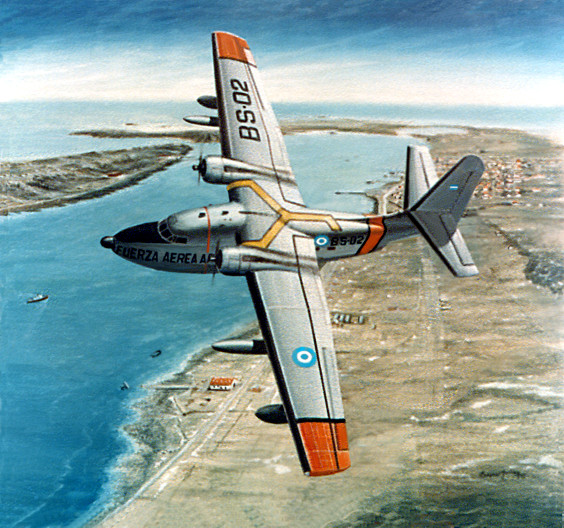

1979- Albatros over INO (Puerto Argentino).
In 1976 Great Britain and Argentina were told by United Nations to discuss the return of the Islands to the last because the world was expected to have no colonies in the year 2,000.
Labour Government started to comply and our teachers teached in the islands while Argentine businessmen tried to purchase companies there too.
LADE (Lineas Aereas del Estado) was managed by the Fuerza Aérea and started a program of flights to the Islands. S there were no runways an Albatros was used instead. This plane was particular because it was capable of landing on water, land and snow and was part of the SAR team that supported the crossings to Antartica.
When Argentina constructed the airport and runway these flights ended and LADE took over the Operations and logistics.
The painting represents the rescue mission of an islander whose life was in danger because of a peritonitis.
My friend and helicopter pilot Longar sent me a picture of my painting that now is at the home of one of the islanders shot by an Argentine during a visit to the Islands. In 1982 this painting was on the wall of the offices of LADE in the capital of the Islands
Artwork by Exequiel Martínez
This painting documents one of the most challenging rescue missions in Argentine aviation: the rescue in the INO mountain area. Mountain rescue operations require extreme precision, terrain knowledge and exceptional technical skill. Exequiel Martínez, who conducted helicopter operations in the mountains and in Antarctica during his career, captures in these works both the technical challenge and the human emotion of saving lives from the air. Explore more of the artist’s works or visit the store.
Mountain and remote area rescue operations represent some of the most demanding flying in Argentine aviation history. The pilots who performed them—often without sophisticated navigation equipment or weather forecasting—displayed a combination of skill, courage and judgement that Exequiel Martínez honors through his art.